ਜੋ ਜੀ ਆਵੇ ਸੋ ਰਾਜ਼ੀ ਜਾਵੇ
Stroke
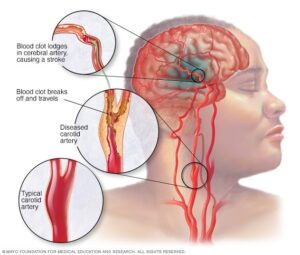 A stroke is a medical emergency that occurs when blood supply to the brain is blocked or when a blood vessel bleeds in the brain. When blood flow becomes blocked or reduced, it's known as an ischemic stroke. This prevents brain tissue from getting oxygen and nutrients. Brain cells begin to die in minutes.
Another type of stroke is a hemorrhagic stroke. It occurs when a blood vessel in the brain leaks or bursts and causes bleeding in the brain. The blood increases pressure on brain cells and damages them.
It's crucial to get medical treatment right away for a stroke. Emergency medical help can reduce brain damage and other stroke complications.
The good news is that effective treatments can help prevent disability from stroke.
Symptoms
It's important to be able to spot the symptoms of a stroke. If you or someone you're with may be having a stroke, try to note the time the symptoms begin. Tell this time to emergency responders. Some treatments are most effective when given soon after a stroke begins.
Symptoms of stroke include:
- Trouble speaking and understanding what others are saying: A person having a stroke may be confused, slur words or may not be able to understand speech.
- Numbness, weakness or paralysis in the face, arm or leg: This often affects just one side of the body. When trying to raise both arms overhead, one arm may fall. Also, one side of the mouth may droop when trying to smile.
- Problems seeing in one or both eyes: A stroke can cause blurry or blackened vision in one or both eyes. It also can cause double vision.
- Headache: A sudden, severe headache may be a symptom of a stroke. Vomiting, dizziness and a change in consciousness may occur with the headache.
- Trouble walking: Someone having a stroke may stumble or lose balance or coordination.
When to See a Doctor
Seek medical attention right away if you notice any symptoms of a stroke, even if they seem to come and go or if they go away completely.
Think F.A.S.T. and do the following:
- Face: Ask the person to smile. Does one side of the face droop?
- Arms: Ask the person to raise both arms. Does one arm drift downward? Or is one arm not able to rise?
- Speech: Ask the person to repeat a simple phrase. Is the person's speech slurred or different from usual?
- Time: If you see any of these signs, seek emergency medical help right away.